
Great Buds Begin Long Before Harvest: How to Choose Seeds You Won't Regret
Seeds set the ceiling of every harvest. How to pick feminized, autoflower or regular genetics, what to check before you buy, and how to dry the flowers properly.
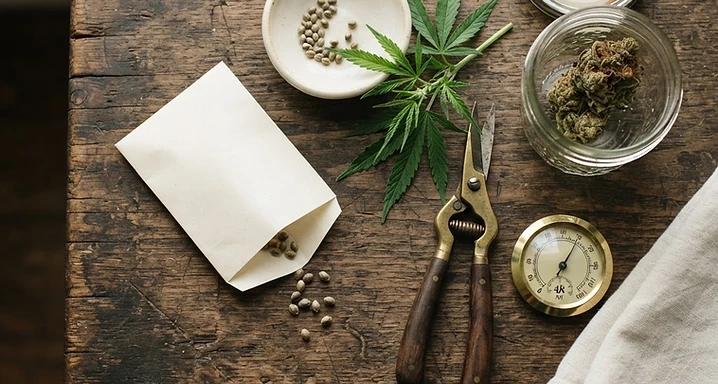
Disclosure: this post contains an affiliate link. If you buy through it, I may earn a small commission at no extra cost to you. Cannabis laws differ widely from place to place, so check the rules where you live before you buy, germinate or grow anything.
Ask a room full of seasoned growers what ruins a harvest and you'll get a dozen answers. Heat stress. Overwatering. A light that sat too close. A tent that never quite stayed dry. Every one of those problems is real, and every one of them is easier to fix than the mistake that sits underneath them all: starting with the wrong genetics.
Seeds set the ceiling. A grower with perfect technique can only get out of a plant what the plant was built to give. Pick a strain that doesn't suit your space, your schedule or your patience, and you spend three months fighting it. Pick well, and the whole grow feels like it's working with you.
So before you think about nutrients or lighting schedules, spend a little time on the decision that matters most. Here's how I'd go about it, along with a drying method that protects everything you worked for.
Start with the question nobody asks: what do you actually want?
It sounds obvious, but most people shop with their eyes. They see a photo of frosty, purple-streaked flowers and click. Photos don't tell you whether a plant will stretch to six feet in a space that holds four, or whether it needs fourteen weeks of flower when you wanted to be done by Christmas.
Ask yourself a few plain questions first:
- How much room do you have? A closet tent and a backyard are different planning problems. Compact, tidy plants suit tight spaces. Tall, sprawling sativa-leaning types want headroom and patience.
- How much time can you give it? Some plants forgive a missed day. Others punish it.
- What do you want from the finished flower? Flavor, relaxation, a clear daytime head, a mellow evening? Strain descriptions are a decent guide here, though no two growers get identical results.
- Indoors or out? Climate, season length and neighbors all shape the answer.
Two minutes of honesty now will save you from seeds that look wonderful and behave badly.
Feminized, autoflower or regular? A plain-English breakdown
The three seed types come up in every grower conversation, and the jargon can scare off newcomers. It shouldn't. Here's the short version.
Feminized seeds are bred to produce female plants almost every time. Only females make the flowers people are after, so feminized seeds spare you the job of sexing plants and pulling males. They run on a light schedule you control: long days for vegetative growth, then a switch to twelve hours of light and twelve of darkness to trigger flowering. That control is useful. You decide how big the plant gets before it blooms.
Autoflowering seeds flower on a timer built into the plant, not on the light cycle. They're usually smaller, quicker and easy to fit into a small space, and many growers like them for a first run because the whole cycle is short. The trade-off is less recovery time. If something goes wrong early, an auto has fewer weeks to bounce back, so gentle handling matters.
Regular seeds produce both males and females, which means you'll need to identify and remove the males unless you're breeding. Experienced growers often prefer them for the genetic variety and for making their own seeds. For a first harvest, though, most people are happier skipping the extra step.
There's no wrong answer, only the one that fits your setup. A beginner with one tent might love an autoflower. Someone who enjoys tinkering and wants bigger yields from a single plant may lean feminized photoperiod. A collector with space and curiosity might go regular.
Why the place you buy from matters
You can do everything right and still lose a grow if the seeds were old, badly stored or mislabeled. Freshness and honest labeling are things you can't judge by looking at a seed. You have to trust the seller.
That's one reason Seedsman has stayed on so many growers' radar. The company has been around since the early 2000s, and in that time it has built one of the largest catalogs in the business: thousands of strains from dozens of breeders, covering feminized, autoflowering, regular and CBD-focused genetics. That breadth means you can compare options side by side instead of piecing together an order from several shops.
A few practical points worth knowing:
- Shop by breeder or by trait. If you've loved a particular breeder's work before, you can follow them. If you're starting fresh, you can filter by type and growing style.
- Discreet packaging. Orders are generally sent in plain packaging with nothing on the outside that advertises the contents, which most buyers appreciate.
- A germination policy. Seedsman publishes a 60-day germination policy. It isn't a blank check, and you'll need to follow their instructions and supply the information they ask for if a claim ever comes up. Still, knowing the process exists before you buy is reassuring. Read the terms and keep your germination notes.
- Frequent new releases. Their new arrivals page is worth a regular look if you like to see what breeders are putting out, from fresh hybrids to updates on old favorites.
Whatever seed bank you use, one habit helps: store your seeds somewhere cool, dark and dry until you're ready to start. A seed that's been sitting in a warm drawer for a year won't perform like a fresh one.
The part people rush: drying
Let's say your plants did well. You've waited weeks, watched the trichomes, and finally harvested. This is the moment when many growers undo months of good work by hurrying.
Drying isn't glamorous, but it decides how your flower smells, tastes and burns. Dry too fast and you lock in a grassy, harsh character, because chlorophyll and other compounds never get the chance to break down. Dry too slowly in damp air and you invite mold, which can ruin an entire batch overnight.
The most common target you'll hear about is 60/60: roughly 60°F (about 15–16°C) and 60% relative humidity. It has become popular because it's easy to remember and tends to produce a slow, even dry that protects aroma. At those conditions, a typical hang-dry takes somewhere around one to two weeks, depending on how dense your buds are and how much air is moving.
Here's the thing, though. 60/60 is a reference point, not a commandment. Plenty of growers get excellent results anywhere between 60 and 70°F with humidity in the 45–60% range, and many commercial operators note that a slightly drier start in the first couple of days, followed by a slower finish, works well. If your room sits at 64°F and 55%, you aren't doing it wrong. You're doing it like most of us.
What matters more than hitting two exact numbers:
- Keep conditions steady. Swings in temperature and humidity do more harm than a small miss on the target.
- Keep the room dark. Light degrades the compounds you're trying to preserve.
- Move air gently. A fan should circulate the room, not blow on the flowers. Direct airflow dries the outside of a bud faster than the inside, and that's how you end up with a crispy exterior and a damp core.
- Give everything space. Crowded hanging branches trap moisture and create mold risk.
- Test the stems. When a small branch snaps instead of bending, it's time to trim and move into jars.
- Don't rush the cure. Once the flowers go into airtight jars, open them daily at first to let moisture escape. After the first week or two, you can ease off. Patience here is what separates good flower from great flower.
A cheap digital thermometer and hygrometer pays for itself the first time it saves a harvest. Guessing is how mistakes happen.
A simple plan for your first (or next) order
If you're not sure where to begin, here's a low-stress way to approach it.
- Pick one goal. Easy first harvest? Biggest yield? Specific flavor? Choose a single priority and shop around it.
- Pick one or two strains, not ten. A smaller, focused first order teaches you more because you can tell what's working.
- Read the grow details, not just the name. Flowering time, height and difficulty notes tell you more than any nickname.
- Keep notes. Dates, temperatures, feeding, anything odd. Next season, those notes are gold.
Ready to find your next grow?
Good harvests are built on small, deliberate decisions, and the first one is choosing genetics that match the way you want to grow. Take your time, be honest about your space, and don't let a pretty photo make the call for you.
When you're ready to browse, head over to Seedsman here. Look through the new arrivals, compare feminized and autoflowering options, and read the grow details on anything that catches your eye. Using this link supports this site at no extra cost to you.
One last reminder: laws on buying, germinating and growing cannabis vary by country and even by region. Make sure what you're planning is allowed where you live, and grow responsibly.
Happy growing, and may your next drying room smell as good as you hoped.
Frequently Asked Questions
Grow With GreenMan
Get our newest researched guides and product picks for people, dogs, and cats delivered to your inbox. No spam, ever.
Keep Reading
Does CBD Show Up on a Drug Test? What You Should Know
Curious if your CBD routine could impact a drug screening? Learn how testing works and why not all CBD products are created equal regarding THC content.
Read PostCBD Oil for Older Cats: Addressing Mobility and Comfort
Is your aging feline slowing down? Explore how to evaluate CBD oil for older cats to help support their daily comfort and mobility as they age.
Read Post